Lifetime Citizen Portal Access — AI Briefings, Alerts & Unlimited Follows
Committee advances mandatory dispensing fee, PBM reforms after heated debate
Loading...
Summary
The House Oversight for Health and Human Services committee advanced SB 2074, a package to create a mandatory dispensing fee and other PBM reforms aimed at shoring up pharmacy margins. Supporters said reforms will save rural pharmacies; critics warned of employer or patient cost increases.
The Oversight for Health and Human Services committee reported out Senate Bill 2074 on a party-line recommendation after hours of debate over pharmacy benefit manager (PBM) practices and the effect of a mandated dispensing fee on employers and patients.
Representative Stinson, the bill sponsor, told the committee the measure would “put in place a mandatory dispensing fee equal to the Medicaid dispensing fee established by the health care authority” to stop local pharmacies from being “chiseled away at by the PBM industry.” He framed the change as an effort to keep both independent and chain pharmacies operating in the state.
Opponents and skeptical members pressed the sponsor on who ultimately would bear the cost. Representative Heffner noted a fiscal estimate that the change could mean roughly $11,647,000 on employer-group health plans, and asked whether employees would face higher out-of-pocket costs or employers would absorb the difference; Stinson said employers could negotiate, change PBMs or absorb some cost but acknowledged a transition period of "fluctuation." Representative Stark asked when the effects would be known; Stinson said he could not predict an exact timeline.
Representative Marty, a persistent critic of PBM practices and a longtime pharmacy owner according to remarks on the floor, argued the bills are necessary to prevent an “existential threat” to rural pharmacies. In a forceful remark he told colleagues, “They are committing federal crimes to fight this legislation, and that we shouldn't let them win,” citing alleged aggressive industry tactics and financial opacity.
Stinson and other supporters said the proposal is the culmination of a multi-bill effort to address prompt pay, appeals and dispensing-fee issues, arguing the measures are the "bare minimum" to preserve access in parts of the state where closures have already reduced pharmacy availability. Opponents warned that mandating a fee could be passed through to employees or customers depending on contracts between employers and PBMs.
After extended questioning and exchanges about rural access, pharmacy margins and enforcement pathways, the committee recorded a 5–3 reported vote to advance SB 2074 out of committee for further consideration by the full chamber.
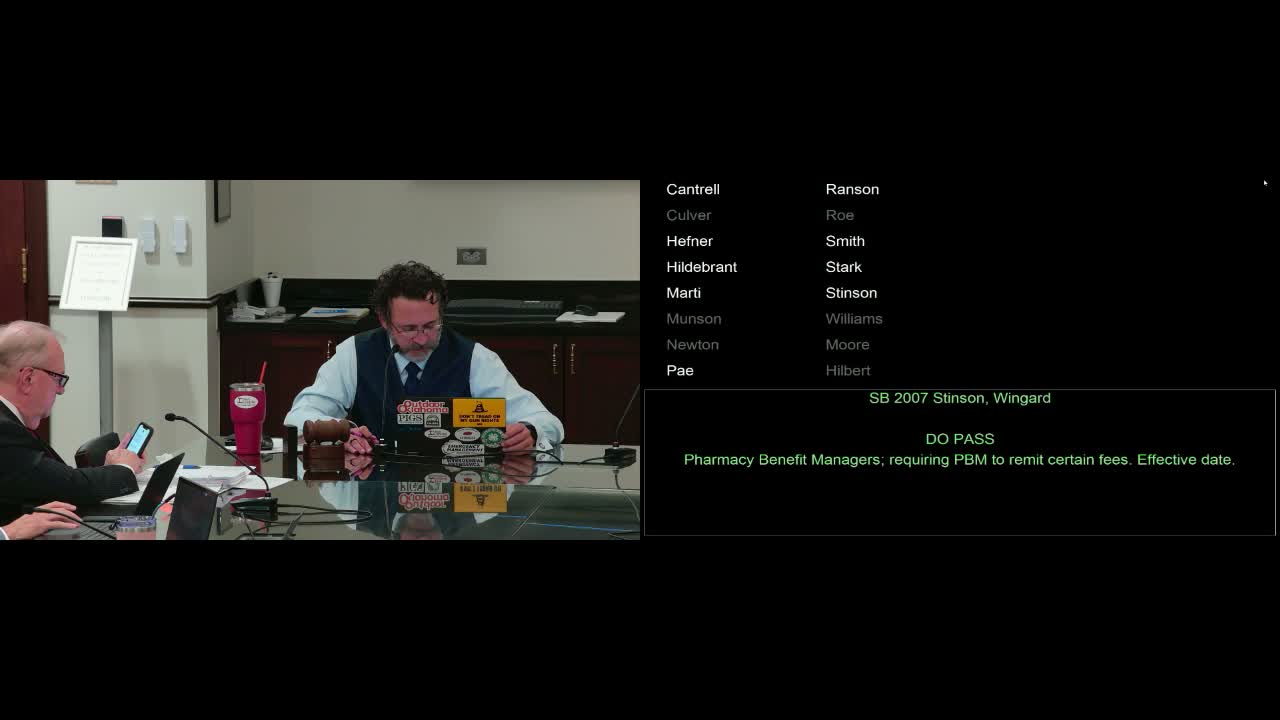
The committee also advanced related PBM measures (including SB 2007 and SB 1500) earlier in the same meeting; advocates said the package together is intended to relieve pressure on community pharmacies, while critics focused on timing and potential short-term cost impacts. The committee will transmit the bills to the House calendar for the next steps in floor consideration.