Lifetime Citizen Portal Access — AI Briefings, Alerts & Unlimited Follows
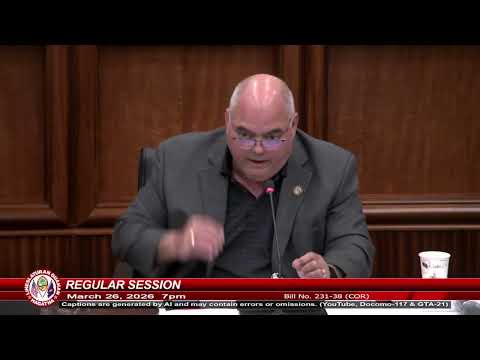
Panel approves tourism façade tax-incentive bill after heated debate over fairness and oversight
Loading...
Summary
Bill 228, which creates a five-year façade-restoration tax credit program (up to $5M per year, $25M total), was advanced after amendments that add definitions and qualification language. Opponents warned the program is subjective, open to favoritism, and diverts public funds from core services; proponents argued it's essential to address "product fatigue" and support tourism recovery.
The Committee of the Whole advanced Bill 228, a package that creates a tourism-enhancing façade-restoration incentive program capped at $5 million per year for five years (a $25 million program total), with the Guam Economic Development Authority tasked with designing eligibility rules.
Senator Lujan (proffering sponsor amendments) and Senator Perez moved technical fixes and a definition for "façade restoration" to clarify that the term covers exterior-preservation work, storefront improvements, signage, landscaping, lighting and similar aesthetic upgrades. The floor adopted multiple technical corrections and a qualification that incentives apply to "qualified improvements."
Debate was robust. Critics, including Senators Jalal, Barnett and others, called the program subjective and ripe for favoritism: "If a business cannot afford to clean, paint, and maintain its own property without public compensation, then the problem is the business model itself," one critic said. Opponents recommended prioritizing direct public-investment programs (parks, beaches, lighting, potholes) instead of a tax-credit approach that rewards private owners for routine maintenance.
Supporters including Senator Gumitata and Speaker Blas argued the program can help reverse "product fatigue," support tourism recovery, and encourage businesses to invest. The sponsor said the program was shaped with input from GEDA and other stakeholders and that the committee process strengthened accountability and structure.
The committee recommended placing the measure on the third-reading file. Lawmakers said questions remain about measurement, procurement of outcomes, and ensuring that the benefits reach small and medium businesses rather than a narrow set of large property owners.