Get Full Government Meeting Transcripts, Videos, & Alerts Forever!
Get email alerts on the Zoning Amendment topic
No spam. Unsubscribe anytime.
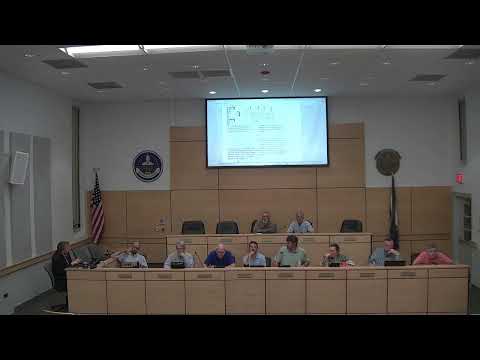
Madison County panel agrees to advertise text change to allow limited residences in B‑1 with conditions
Summary
After a lengthy workshop, the Madison County planning commission agreed by straw poll to advertise a zoning amendment that would permit single‑family dwellings in the B‑1 business district by special use permit, limiting occupancy and adding 'existing structure' language to prevent new buildouts from evading zoning, and deleting a related subsection.
Madison County planning commissioners voted in a straw poll to advertise a zoning ordinance amendment to allow limited single‑family residences in the B‑1 business district by special use permit.
The change under consideration would permit a single‑family dwelling or apartment in an existing business structure or an existing accessory building as a secondary use, but would restrict occupancy — for example to property or business owners, family members, or caretakers — and would disallow new construction built specifically to sidestep the ordinance. Chair (unnamed) framed the question for the panel and staff said the proposal aims to balance mixed‑use economic development and protections for B‑1’s business character.
Commissioners debated wording at length. Commissioner Steve Carpenter (identified in the record as "Mister Carpenter" in the transcript) proposed language intended to put the restriction clause first; some members pushed to retain safeguards that limit who can occupy the dwelling, while others warned that putting a specific adoption date in the ordinance could appear arbitrary. Staff member Alan Nichols urged the commission to consider the amendment through the lens of the county’s comprehensive plan and cited the ordinance cross‑references that govern nonconforming uses and change‑of‑use permitting.
Several members supported keeping the allowance limited to structures that are already in place and to avoid language that would let someone build an accessory structure and immediately apply for a special use permit. One commissioner summarized that the options boiled down to four paths: amend by right, amend to allow by SUP (the preferred path), rezone, or deny the use; the commission gravitated toward amending to allow by SUP.
By show of hands the commission indicated support for 'option 3' redlined language with a deletion (removing section 8‑2‑1) and for advertising the amendment for public hearing. Staff said it will reformat the agreed text for advertisement and bring it back for public hearing and subsequent board review. The commission did not take a formal binding vote on adoption at the workshop; the action taken was to publish the amendment for the required public notification and hearing process.
What happens next: staff will prepare the final advertised language and a staff report explaining source citations for new definitions (many drawn from the American Planning Association dictionary), legal cross‑references, and the amendment’s consistency with the comprehensive plan. A public hearing will be scheduled where the commission will receive testimony before making a recommendation to the board of supervisors.
"I think the board behind us is willing to take the risk on it as well that it has enough safeguards," one member said during the discussion, reflecting support for a cautious, case‑by‑case approach. The transcript indicates a clear direction to proceed to advertisement rather than an immediate ordinance adoption.