Lifetime Citizen Portal Access — AI Briefings, Alerts & Unlimited Follows
Commission backs draft objective design standards with edits, urges City Council review
Loading...
Summary
After a lengthy presentation and public comment, the commission recommended the draft objective design standards be transmitted to City Council with edits including allowing ornamental banding, counting side yards toward common open space, permitting limited projections into setbacks and removing a proposed 12‑foot public‑realm minimum.
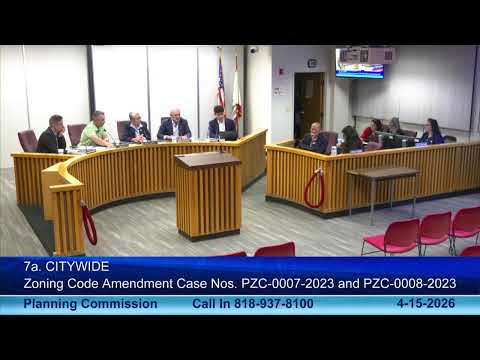
The Glendale Planning Commission on April 15 recommended that City Council consider adopting a package of zoning code amendments that establish Objective Design Standards (ODS) for multifamily and mixed‑use development, subject to several changes the commission requested.
Long‑range planning staff presented the draft ordinance (PCC‑0007‑2023 and PCC‑0008‑2023), a roughly 90‑page package that would amend GMC chapters 30.11 and 30.12 and add a new chapter 30.17 establishing measurable design standards. Staff said the ODS are intended to streamline review of qualifying housing projects and preserve local design control in light of state legislation such as SB 79, which takes effect July 1 unless modified.
Key elements of the draft include elimination of floor‑by‑floor "wedding cake" setbacks, three‑story default building height, façade modulation standards to break up long building faces, and a new common open space amenity (COSA) requirement based on lot percentage rather than per‑unit formulas. Staff also proposed a 12‑foot curb‑to‑building public‑realm requirement on commercial corridors to create a consistent, pedestrian‑oriented streetscape.
Public comment included one caller who urged more refinement before forwarding the draft to council and multiple written letters provided to commissioners. Commissioners asked about how the ODS interact with state law and a range of technical details including façade articulation thresholds, the COSA locational rule and the proposed 12‑foot public‑realm standard.
After discussion, commissioners coalesced around several recommended edits: allow interior (side‑yard) setbacks to count toward COSA so common open space may be located anywhere on the lot provided all residents can access it; add "ornamental banding" as an accepted façade articulation option; permit up to 12 inches of projection (for balcony railings or ornamental elements) into required setbacks; and remove the mandatory 12‑foot public realm minimum from the commission’s recommendation so council can consider it with additional context.
Long‑range planning staff said they intend to forward the commission’s recommendation and the redline edits to City Council for introduction on May 12 and potential adoption on May 19; if adopted by council, staff said the ordinance would take effect 30 days later, ahead of the July 1 SB 79 deadline. The commission voted to transmit the draft ordinance with the stated comments and suggested revisions.
The commission’s vote to recommend the ordinance with edits was unanimous on roll call; the package will advance to City Council for consideration.