Lifetime Citizen Portal Access — AI Briefings, Alerts & Unlimited Follows
Rep. Underwood’s bill would add dementia-care competencies to CNA training
Loading...
Summary
HB244 would require certified nursing assistant programs to include core competencies for dementia and behavioral-health care; subject-matter experts and advocates testified the change would improve care and reduce staff burnout, and the committee will revisit the bill Friday with an amendment deadline.
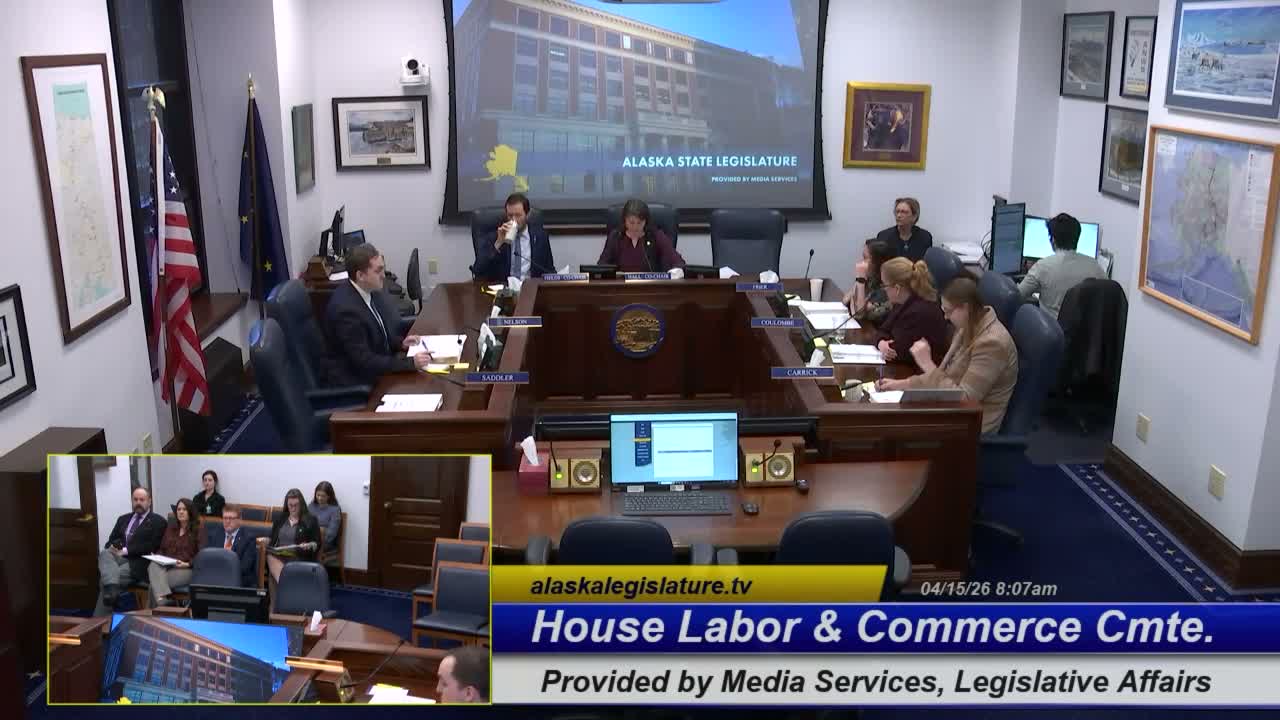
House Bill 244, sponsored by Representative Jubilee Underwood, would update Alaska statute to require that certified nursing assistant (CNA) training programs include explicitly defined core competencies in dementia care, effective Jan. 1, 2027. The sponsor said the measure does not create new licensing requirements or broaden regulatory authority but would ensure training standards reflect “real-world demands” placed on CNAs.
Advocates told the Labor and Commerce Committee that the change addresses a clear gap. Lisa Souder, CEO of Alzheimer’s Resource Alaska, said an estimated 50–70% of residents in long-term care settings have some cognitive impairment and that “we’re not preparing our workforce to be successful in this environment,” describing a demand for accessible, mobile-friendly training her group expects to make available July 1. “If we can properly equip [CNAs], make them feel empowered ... it’s a win for everyone,” Souder said.
Michelle Giroux, executive director of Hope Community Resources, and Marj Stoneking of AARP Alaska also urged support, saying more robust training would improve retention by reducing burnout among direct-care workers. The invited witnesses identified a mix of online modules and short in-person trainings, and noted development in cooperation with University of Alaska programs and the State Board of Nursing.
Committee members asked whether currently licensed CNAs would be required to complete the new training. Buddy Witt, staff to Representative Underwood, said the bill’s language is intended to set minimum competencies in statute and that, for currently licensed CNAs, the license would remain current but holders might need the course when they reapply or if regulation requires it in the future. Souder said the current bill does not mandate immediate retraining for all licensed CNAs and emphasized the voluntary demand for the training series they’re already running.
Representative Kerrick pressed for specificity about hours and adequacy; witnesses and staff said some existing programs place only about one hour on Alzheimer’s and dementia care and that stakeholders recommended more targeted instruction, but that HB244 deliberately specifies competencies rather than a fixed number of hours. The sponsor and staff said the bill came through prior committee work “clean” and that detailed drafting contributors included subject-matter experts who helped develop the competency list.
The committee set HB244 aside to return on Friday, April 17, and established an amendment deadline of 9 a.m. that day. The sponsor asked the committee to consider the measure as a workforce-quality and patient-safety initiative rather than a licensing expansion.
What’s next: The committee will take further questions and possible amendments when HB244 returns Friday; witnesses said training materials and an initial online course are expected to be available to Alaskans by summer.