Get Full Government Meeting Transcripts, Videos, & Alerts Forever!
Get email alerts on the Local Government topic
No spam. Unsubscribe anytime.
Louisiana Judiciary Committee advances bill that would dissolve Orleans criminal clerk’s office after heated hearing
Summary
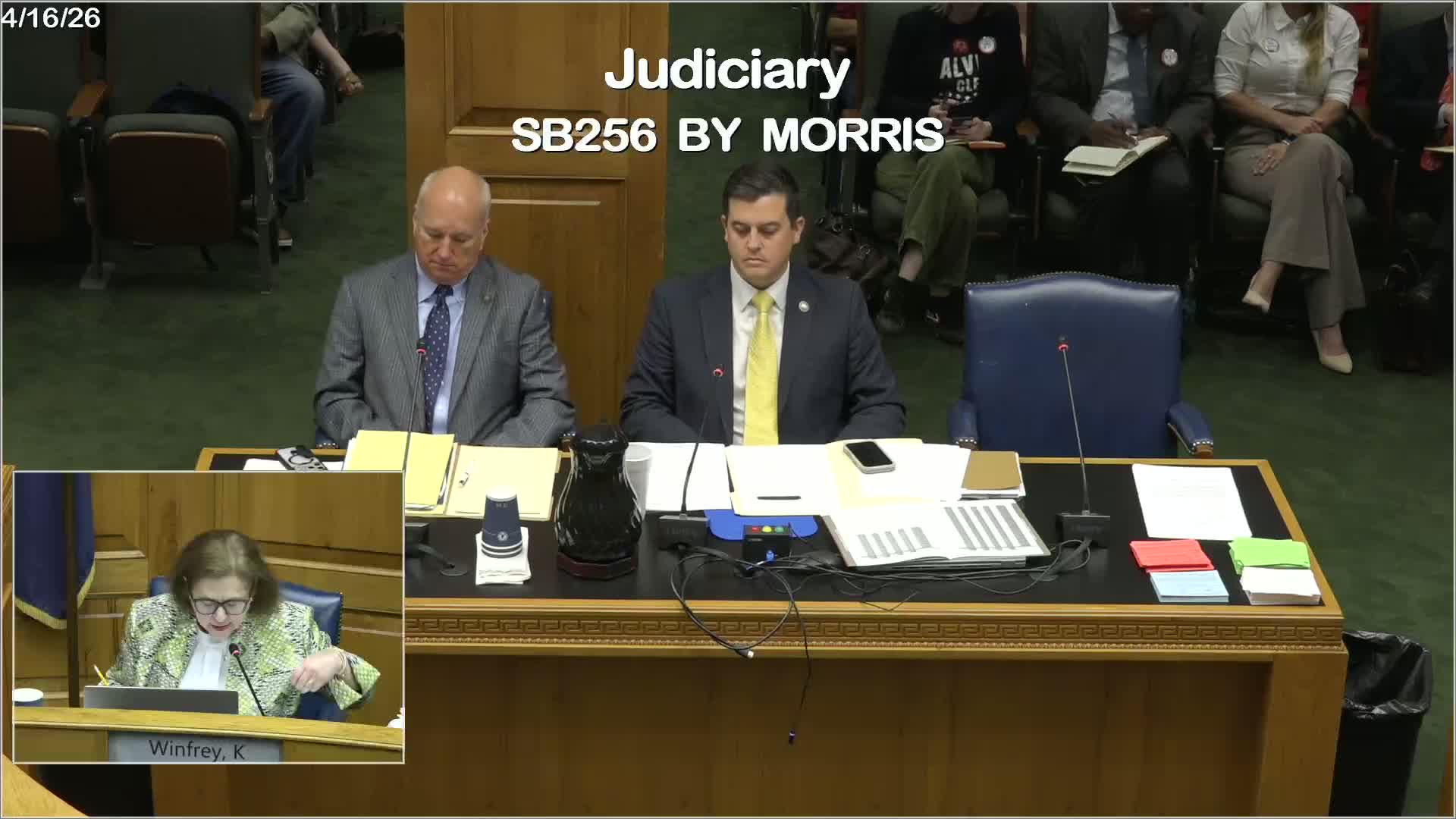
The Judiciary Committee voted to report Senate Bill 256, which would merge Orleans Parish’s civil and criminal clerks of court into a single Orleans Parish clerk, after a marathon hearing in which the bill’s author argued efficiency while opponents — including the newly elected criminal clerk, civil-rights groups and dozens of New Orleans residents — warned it would nullify a recent election, create legal risk and disrupt court operations.
The House Judiciary Committee reported Senate Bill 256 favorably on a party-line committee vote after a full-day hearing that sharply divided members and filled the public gallery with dozens of New Orleans residents and civil-rights advocates.
The bill, authored by Sen. Jay Morris, would consolidate the Civil District Court clerk and the Criminal District Court clerk in Orleans Parish into one Orleans Parish clerk of court. Speaking to the committee, Morris said the measure would align Orleans with practice in every other parish and reduce state subsidies for criminal-court operations. “This bill…combine[s] the clerks of the Criminal District Court and the Civil District Court in New Orleans,” Morris said, arguing the consolidation is meant to improve efficiency and fairness across parishes.
Opponents countered that the bill is rushed, legally fraught and politically targeted. Calvin Duncan, who was elected in November as clerk of the Criminal District Court and who testified before the committee, described his election as a mandate to fix long-standing records problems and pleaded with lawmakers not to erase the will of New Orleans voters. “The people that took a chance on me… they believed that their votes was gonna count,” Duncan said in testimony.
Civil-rights groups, longtime local officials and many individual voters warned the committee that the statute, as written and timed to take effect on the governor’s signature, could prevent recently elected officials from taking office and would likely prompt litigation. Sarah Whittington of the ACLU of Louisiana told members the bill’s silence on who would hold the consolidated office creates a plausible argument that a special election is required for any newly created position.
Several witnesses and former clerks also presented technical and fiscal objections. Former Criminal District Court clerk Arthur Morrell told the committee that system incompatibilities, facility needs and records-preservation work would create substantial costs and operational risks if the consolidation were implemented immediately. Chelsea Richard Napoleon, the elected clerk of the Civil District Court, said the legislation would add duties while reducing the clerk’s revenue share from 50% to 40%, creating an immediate funding shortfall for any expanded responsibilities.
Committee members pressed Morris on timing: many asked why the bill was not filed before last year’s election and whether the Legislature was effectively nullifying the vote of roughly 38,000 Orleans residents who supported Duncan. Representative Kyle Green warned colleagues the move could be perceived as disenfranchisement; Representative Jordan and others repeatedly asked about constitutional constraints and whether the bill shortens a term of office.
Morris acknowledged litigation was likely but defended the bill as lawful and consistent with legislative authority. He told members the consolidation had been debated for years and was intended to address the unique fiscal arrangements in Orleans Parish, where criminal-court operations lack the revenue streams civil clerks collect elsewhere.
After hearing more than 70 public testimonies — primarily in opposition — the committee considered procedural motions. A substitute motion to defer the bill failed on a 5–9 vote. The committee then voted to report the bill favorably and send it to the next stage of the process.
What happens next: SB 256 will proceed out of the Judiciary Committee and may return to the House floor for further debate and amendment; multiple witnesses and several lawmakers said the measure will almost certainly face court challenges if enacted without delay or an implementation plan.
Votes and actions: The committee approved the motion to report SB 256 out of committee with the roll-call result recorded in committee minutes. The committee earlier adopted a 3-minute speaking rule for members during questioning and allowed two 3-minute replies for members under that rule.
— Reporting by the Judiciary Committee hearing transcript; quotes and attributions are taken directly from witness testimony and committee remarks.