Get Full Government Meeting Transcripts, Videos, & Alerts Forever!
Get email alerts on the Surveillance Policy topic
No spam. Unsubscribe anytime.
Residents demand public forum and oversight after council debate over Flock ALPRs
Summary
Dozens of Thornton residents urged the City Council to hold a formal public hearing and tighten oversight of the city's Flock automated license-plate reader (ALPR) system, raising privacy, data-sharing and auditability concerns; councilmembers exchanged competing views on public safety and transparency but took no formal action to stop or expand the contract.
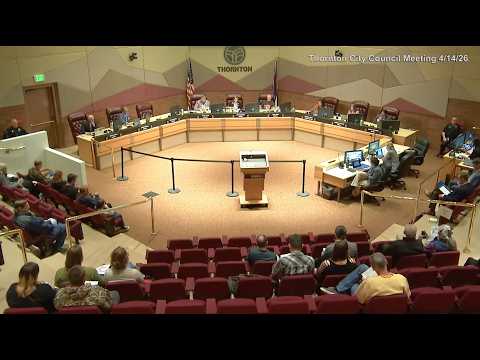
Dozens of Thornton residents used the meeting's public-comment period to press the City Council for a formal public forum and stronger oversight of the city's Flock automated license-plate reader (ALPR) system.
Jacob Wilson, of Ward 4, opened the sequence of surveillance-focused comments by urging the council to "stop allowing the loudest voice in the room to dictate our security posture" and to adopt a public hearing and community-driven recommendations for continued use and oversight. Chris Cook, a Ward 4 resident and technology professional, proposed three concrete safeguards: require judicial warrants for queries (with narrow emergency carve-outs), prohibit sharing ALPR data with outside entities, and create an independent third-party auditor to monitor Thornton Police Department use.
Other speakers widely echoed concerns about data retention, third-party access and auditability. Anne Smith summarized reporting from other cities that have tightened or canceled ALPR contracts after disclosures of third-party access and security problems; a number of commenters cited cases where plate-matching errors led to wrongful arrests. Will Kircher and others provided counts intended to show very high capture volumes with a tiny fraction of records ever queried, arguing that such bulk collection requires a higher public-safety and privacy bar.
Council discussion acknowledged the community's concerns but reflected differing priorities. Mayor Pro Tem Ayala noted why ALPRs were implemented originally — to address a surge in vehicle theft — and said the city must ensure data collection complies with Colorado law; she proposed exploring alternative vendors, strengthening data policies and dedicating a police-engagement session to the issue. Council member Alge said he was continuing one-on-one outreach in Ward 2, emphasized procurement and budgetary constraints (ALPR funding is included in the operational budget), and pledged to review documents closely before deciding.
Council member Salazar urged the council to "move forward with the public forum" and pressed for direct engagement and transparency. Council members Byrd and others defended the department's work and the technology's public-safety benefits while also saying audits and oversight measures have been strengthened since residents raised concerns.
No formal vote or ordinance altering the ALPR contract was taken at the meeting. Several residents and council members asked staff to organize structured engagement and policy options; the mayor and other council members pointed to upcoming opportunities for dialogue including ward meetings and the city's police engagement series. The meeting record shows the issue remains a live policy question for Thornton rather than one resolved by the council at this session.
The public-comment segment and ensuing council debate is expected to shape whether the council schedules a standalone forum or adopts new ordinance-level controls on acquisition, data access and third-party sharing of ALPR information.