Get Full Government Meeting Transcripts, Videos, & Alerts Forever!
Get email alerts on the Housing Development topic
No spam. Unsubscribe anytime.
Developers present conceptual plan for former Saint Robert site on Euclid’s Lakeshore Boulevard
Summary
A development team told the Architectural Review Board that a conceptual plan for the nearly 8-acre former Saint Robert site on Lakeshore Boulevard would include roughly 50 single-family homes, an internal street with a 10-foot bike path, underground utilities and a retention basin; the board asked for more streetscape variation and renderings before the next review.
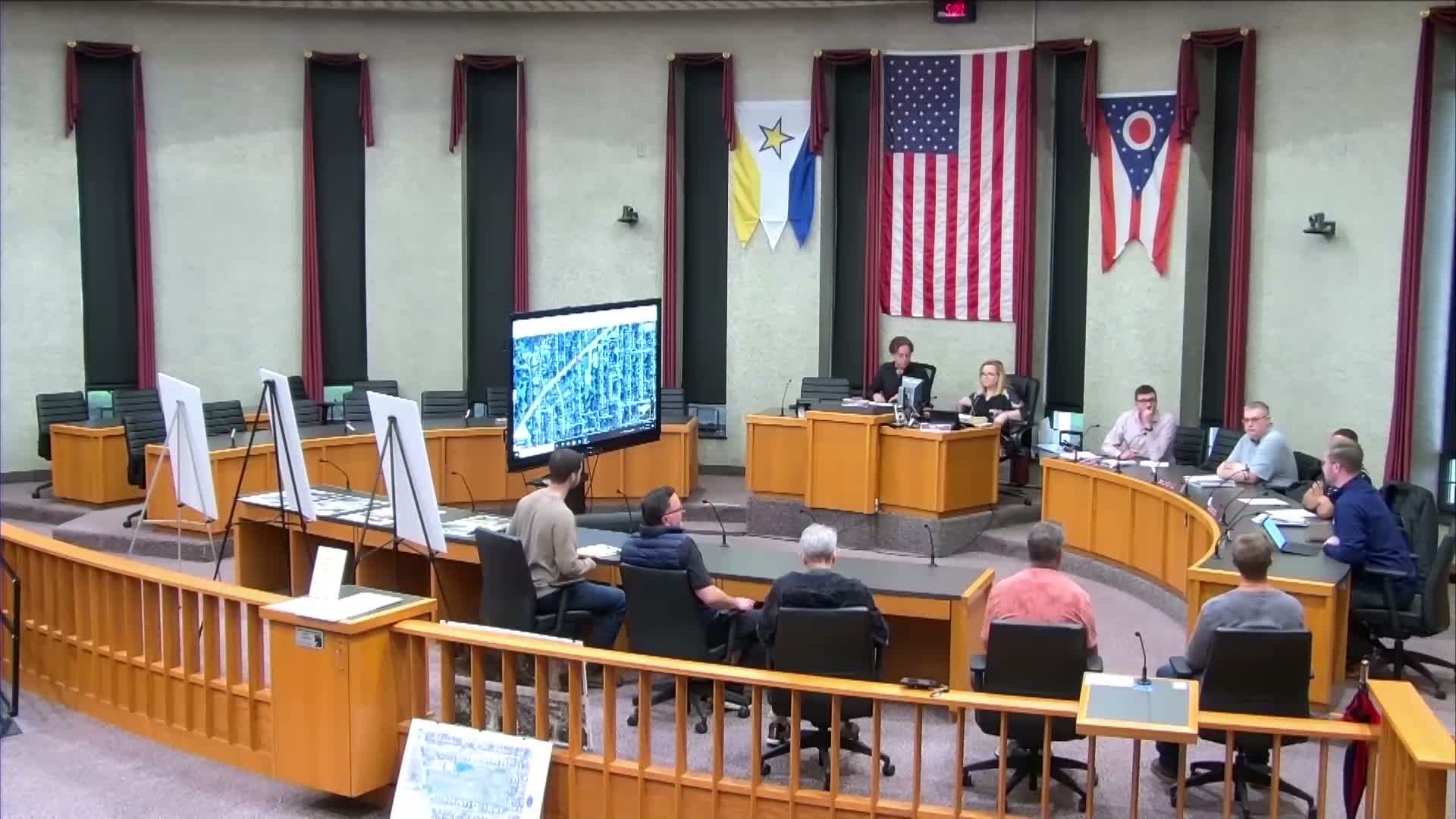
Euclid — A development team presented a conceptual plan to the city’s Architectural Review Board for the nearly 8-acre parcel along Lakeshore Boulevard between East 238th and East 242nd that would convert the former Saint Robert site into roughly 50 new single-family homes.
At a working session, a city staff member outlined the project scope and said the plan is a concept that will proceed through community engagement. “Give or take around 50 new homes,” the staff member said when describing the proposal’s scale. The development team said the subdivision would include an internal street, a proposed 10-foot-wide bike path and a retention basin to manage stormwater.
The developers described three house types under consideration — named in the presentation as the Iris, the Lily and the Marigold — with the smallest and largest floor areas presented as about 1,660 to 2,150 square feet. Joe Bavanda, a member of the development team who identified himself as a Euclid native, said the goal is to deliver mostly single-family homes with two-car garages and yards while keeping the product affordable for the local market.
City and board members probed site design and neighborhood fit. Questions focused on lot spacing (developers said homes would be separated by about 10 feet), front setbacks (about 20 feet along the proposed new road) and how a retention basin would sit in the streetscape. An ARB member said the pond should not become an intermittently filled hole and urged designers to treat it as a neighborhood amenity if it is visible from homes.
Developers said retention-basin details will be set by engineering calculations and city stormwater requirements. An engineer on the team noted the basin shown on the concept plan is sized for the full eight acres; formal pre/post stormwater calculations, including any Ohio EPA or city engineering requirements, will determine the final basin area, depth and discharge connections.
The team described options to make any basin a maintained feature rather than a stagnant depression. “If the terrain allows us to keep it full, we put fountains,” a development representative said, noting that decorative features add maintenance and electricity costs and would likely fall to the homeowners association to maintain.
ARB members also urged more variety in street-facing home profiles. The board said the three proposed models appeared very similar in massing and rooflines and asked the developers to show real-world examples or renderings that demonstrate how elevation variation, roof forms and porch placement could improve street engagement and safety. The developers said they can produce renderings and examples from recent projects showing how limited product lines can be varied with elevations, materials and color schemes.
On utilities and pedestrian access, the development team said most utilities are planned to be buried along the new main street but that final routing will depend on engineering and connection points to the existing neighborhood. The team also said the conceptual plan anticipates sidewalks, street trees and internal connectivity to Euclid’s lakefront infrastructure where feasible.
City staff emphasized community engagement as the next step. The staff member said the conceptual plan was part of the project’s RFP response and reiterated that public feedback will be incorporated. The developers pledged to return with refined drawings and street-level renderings that respond to the ARB’s comments.
The ARB did not take any formal vote at the working session; members framed the meeting as an early review to provide design guidance and asked the development team to bring revised plans and visualizations to a future meeting.