Lifetime Citizen Portal Access — AI Briefings, Alerts & Unlimited Follows
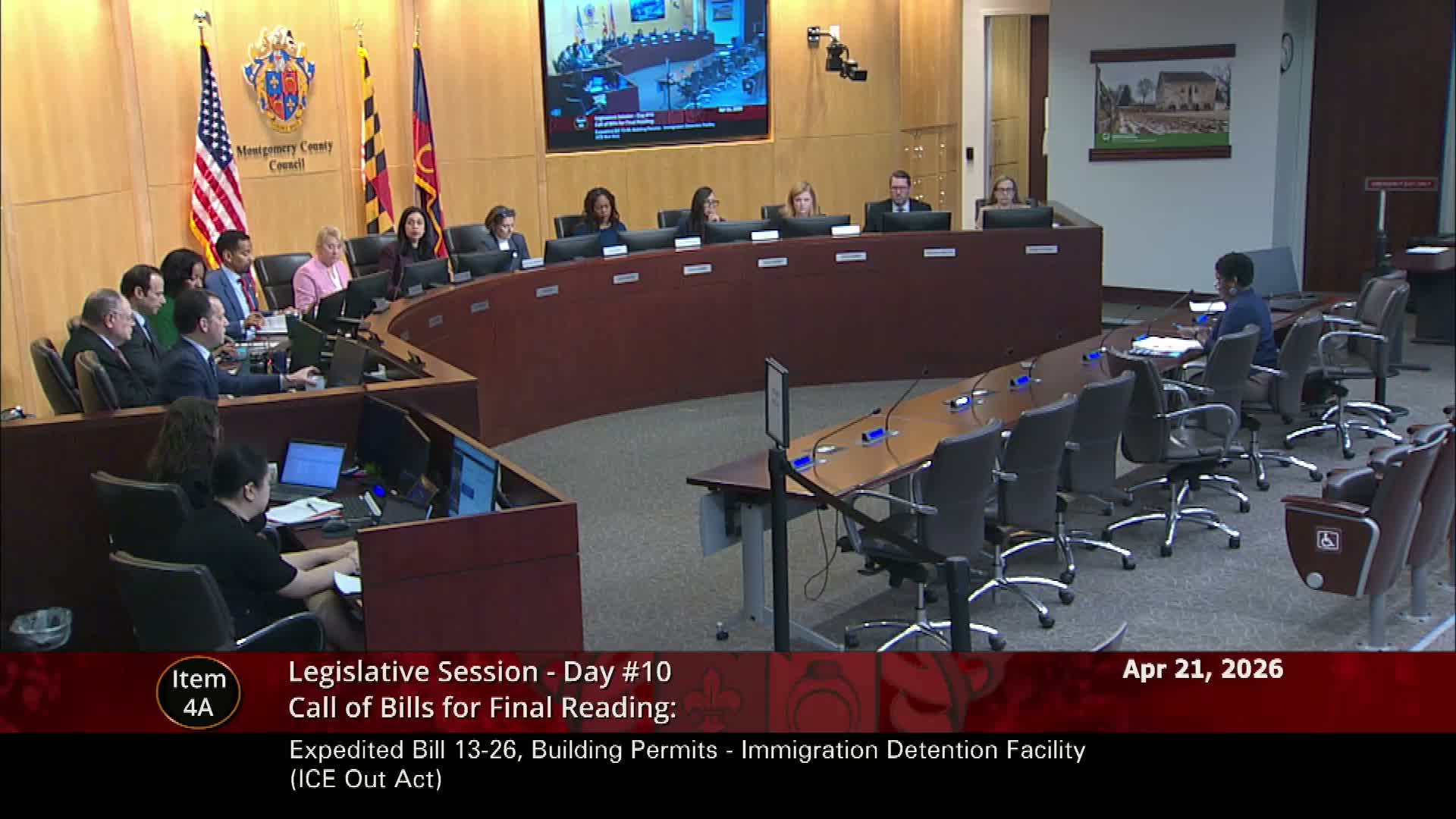
Montgomery County Council unanimously adopts local "ICE Out Act" banning private immigration detention permits
Loading...
Summary
The council amended and unanimously passed expedited bill 13‑26 to prohibit permitting for privately owned detention facilities (expanded to cover all private detention centers in line with state language). Staff said new state law (HB 10‑17) already addresses the issue, but the local ordinance was adopted as well.
The Montgomery County Council unanimously approved an amended expedited bill (13‑26), commonly referred to in debate as the "ICE Out Act," prohibiting Department of Permitting Services from issuing building permits or use‑and‑occupancy permits for privately owned detention facilities.
Councilmember Evan Glass, lead sponsor, said the bill prevents Montgomery County permitting from being used to establish immigration detention facilities in the county and framed the ordinance as a proactive protection for immigrant neighbors. Staff briefed the council that the Maryland General Assembly passed HB 10‑17 on April 13, which broadly restricts private detention centers; staff said the state law and the local bill are compatible and do not create a conflict that would preempt local action.
Councilmember Don Lukey offered an amendment to broaden the bill’s definition of "detention facility" to align with the state law and improve the measure’s legal footing. The council adopted the amendment by unanimous voice vote. A roll‑call vote followed on the amended expedited bill; the clerk recorded affirmative votes from all members present and the council president declared the bill passed.
Council staff noted that, even if the state measure were overturned and its contingency clause triggered, the county’s zoning rules and the local bill’s amended definition would continue to limit privately owned detention uses under existing zoning classifications.
Because the final text was amended during the meeting, staff said they would circulate the updated version to the council and the public as part of the clerk’s file. The roll call and clerk’s record were read into the meeting minutes.