Get Full Government Meeting Transcripts, Videos, & Alerts Forever!
Get email alerts on the Subdivision Zoning Updates topic
No spam. Unsubscribe anytime.
Grayson County planners debate family-sale hold, clarify right-of-way language and fees
Summary
At its April 21 meeting the Grayson County Planning Commission discussed proposed subdivision and zoning ordinance revisions including a staff proposal for a 2-year family-sale hold (staff noted state law allows up to 15 years), debate over hardship waivers and fee restructuring; commissioners postponed a public hearing until attorney clarifications and additional fee data are provided.
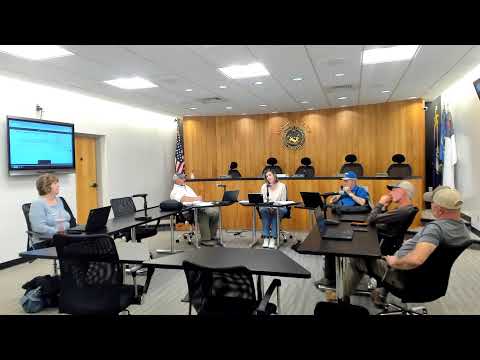
The Grayson County Planning Commission spent the bulk of its April 21 meeting reviewing proposed revisions to the subdivision and zoning ordinances, focusing on a proposed family-division sale restriction, definitions of rights of way, and a potential restructuring of fees for plan review and subdivisions.
Planning staff said the county attorney advised that jurisdictions may impose sale restrictions of up to 15 years on lots created by family divisions, but staff had proposed a 2-year hold to reduce circumvention of the ordinance. "You can put restrictions up to 15 years on the sale of lots outside of the family and require a covenant if you so desire," Planning staff said, citing the attorney's guidance. Staff said the shorter, two-year option had been considered to limit administrative burden while addressing rapid resale that would create unplanned subdivisions.
Commissioners pressed staff on how hardship waivers would operate if the commission kept a 2-year restriction. Commissioners listed likely hardship categories — bankruptcy, medical expenses, divorce, tax liability and death — and debated whether to require documentary proof such as bank statements or to set a firm monetary threshold. "If you don't set something like that, it could go on; everybody's definition of hardship is different," one commissioner said. Several commissioners suggested that appeals or final waiver decisions be handled by the board of supervisors rather than a single designated agent to avoid ad hoc precedents.
The commission also asked the attorney to clarify the ordinance's right-of-way wording. Staff relayed the attorney's distinction between a public right-of-way (land dedicated and potentially accepted by VDOT for public passage) and a private easement for ingress and egress. The chair noted concern that the ordinance's reference to "fee simple" could mislead landowners whose properties include private easements but who do not transfer ownership of the strip of land.
On fees, staff reviewed the county's reliance on contracted erosion and sediment-control plan reviewers and said peer localities vary widely in approach. Staff cited one jurisdiction that charges an initial $125 plus $25 per week for projects that remain unstabilized and noted most localities charge between $250 and $500 for rezones or special‑use permits. Staff will prepare a comparative spreadsheet of local fees and present it in the next packet.
No ordinance changes were adopted at the meeting. Planning staff said it would consolidate the commission's feedback, seek clarified language from the county attorney on waivers and rights-of-way, and return the revised language and the fee-comparison spreadsheet at a future meeting before setting a public hearing. The commission agreed to delay the public hearing and further action until those clarifications are presented.
The commission also discussed related zoning ordinance housekeeping — moving subdivision design standards into the zoning ordinance, updating definitions (including agricultural purpose and agritourism), and adding manufactured-home definitions to align with the Manufactured Home Lot Rental Act — but reserved formal action until the attorney's recommended language is incorporated.
Staff noted pending state-level statutory changes affecting cannabis and renewable-energy provisions and said the county will need to amend local zoning language once clearer guidance is available from the governor's office.