Get Full Government Meeting Transcripts, Videos, & Alerts Forever!
Get email alerts on the Probate Notice Life Estate topic
No spam. Unsubscribe anytime.
Attorney says deed recorded by personal representative terminated Karen Price’s life estate without notice
Summary
In a hearing over the estate of Dalton, counsel for Karen Price told the court that Dalton Wall, acting as personal representative, recorded a deed that terminated Price’s defeasible life estate without giving her notice; counsel for the estate said Price had notice of probate and failed to satisfy the will’s conditions.
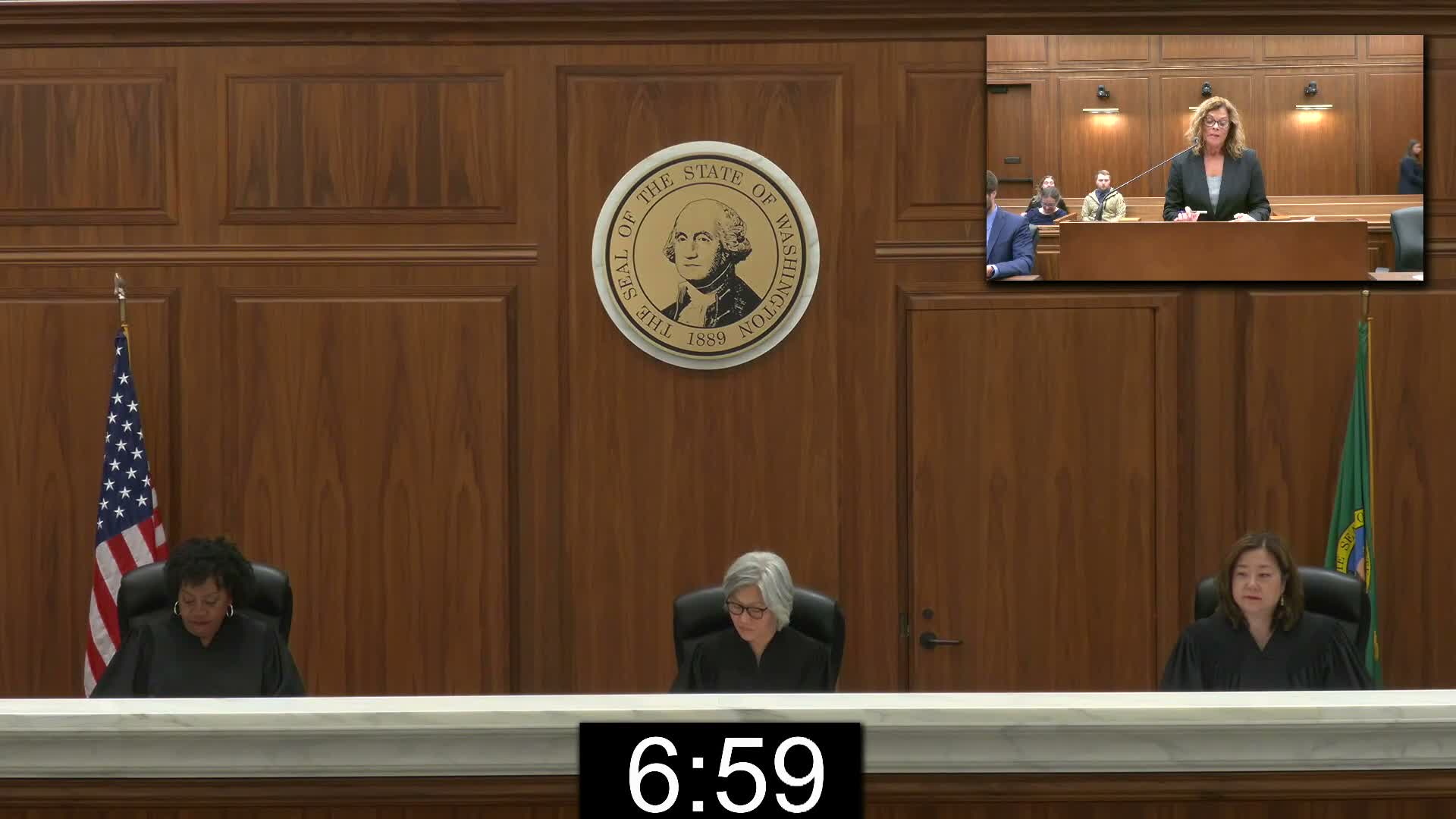
At a hearing in the matter of the estate of Dalton, Karen Bertram, attorney for appellant Karen Price, told the court that Price was “wrongfully evicted” from the home she’d occupied for 22 years after Dalton Wall, acting as personal representative of his father’s estate, recorded a deed that, Bertram said, unilaterally terminated Price’s defeasible life estate without notice.
Bertram said Price had received a life estate from Mark Wall intended to provide her a lifetime residence and that Dalton never told Price he believed she had failed to meet the will’s conditions or that he had recorded a deed terminating the life estate. “Karen Price was wrongfully evicted from her home of 22 years,” Bertram said, and she argued the deed was void on its face because Price never received notice and therefore could not address the allegations in the deed.
The central legal dispute before the court was procedural: whether notice of the pendency and completion of probate — the declaration of completion — put Price on notice that a remainderman could record a deed that would end the life estate, or whether the recording of Dalton’s personal-representative deed required separate notice and an opportunity to be heard. A judge asked whether Bertram’s due-process theory had been raised below; Bertram said it had been raised in briefing but not in the lower probate proceeding, which she described as a TEDRA matter set for a brief initial hearing.
Luke McDonough, attorney for the administrator of Dalton’s estate, Hannah Stokes, told the court that Price did have notice of the probate pendency and of the declaration of completion and that the will’s conditions were clear. McDonough summarized the will’s conditions as requiring the life tenant to pay mortgage, taxes, insurance and to provide semiannual statements; he said there is no record evidence Price satisfied those obligations. “Not only did the appellant fail to satisfy the conditions of her defeasible life estate,” McDonough said, “appellant has no proof nor scintilla of evidence demonstrating compliance with the terms of the will.”
McDonough also argued that Dalton acted under the will’s nonintervention powers and properly recorded a personal representative’s deed in June 2023. He told the court that the trial court struck two declarations under the dead-man statute and cited IRWIN and RCW 11.12.070 in support of the legal position that a life tenant who receives the benefits of property burdens must also assume the property’s obligations.
Judges pressed both sides on procedure and remedies: what a living remainderman must do to give notice, whether an appellant could have moved to vacate or brought fraud claims if the remainderman were alive, and what standard would permit reopening a closed estate. McDonough invoked Pitzer, saying reopening requires proof of extrinsic fraud or a void decree of distribution and argued those standards were not met because Price had notice of the probate’s pendency and completion.
Bertram replied in brief rebuttal that while the declaration of completion notified Price that probate was closing and that she held a life estate, it did not notify her that a deed had been recorded that terminated the life estate; she said Price learned of the deed only after Dalton died and that Price filed a petition to invalidate the deed. The court then adjourned the docket.
The hearing focused on mixed questions of notice, probate procedure, and the standards for collateral attack on a probate distribution; no final ruling was announced in the transcript.