Get Full Government Meeting Transcripts, Videos, & Alerts Forever!
Get email alerts on the Cannabis Zoning topic
No spam. Unsubscribe anytime.
Pine County adopts targeted amendments to cannabis zoning ordinance after public hearing on lights, odor and greenhouse venting
Summary
After a public hearing in which neighbors and growers debated lights, odors and greenhouse venting, the Pine County Board adopted Ordinance 2026-17, replacing Ordinance 2024-58, to clarify which activities trigger odor controls and how vents are sited on hard-sided buildings.
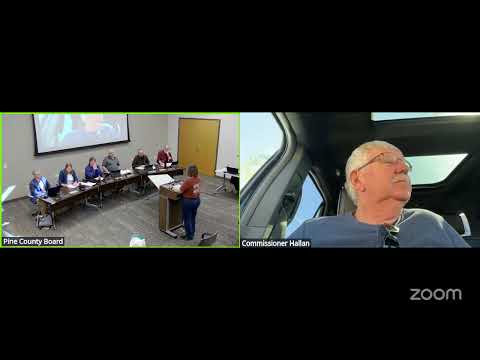
The Pine County Board on a voice vote adopted Ordinance 2026-17, replacing Ordinance 2024-58, after a public hearing that focused on nuisance complaints about bright lights, strong odors and ventilation from cannabis operations.
County planning staff presented the targeted amendments, which the board said are intended to address implementation issues that appeared when the county started applying the 2024 ordinance to real-world facilities. County administrator/planning staff Kelly Schroeder told commissioners the changes include routine re-lettering for clarity; moving retail-only micro and meso businesses out of the cultivation section so retail-only endorsements are regulated under the retail rules; making odor restrictions activity-based (drying, aging, trimming and packaging) rather than tied only to an indoor building; and clarifying that rooftop-exhaust requirements apply to hard-sided buildings while recognizing greenhouses are treated as outdoors under Office of Cannabis Management guidance.
That last point was a persistent theme in public testimony. Neighbors and township residents said they can see grow lights from miles away and that odors from greenhouse and mixed-light operations have disrupted everyday life. John DeGrae of Arlington Township told the board the lights are visible “7 to 10 miles” away and urged the county to control light pollution. Another resident who said she serves on the extension service committee urged the board to consider how nuisance issues affect rural population retention.
Growers and operators told the board they are following state and county rules. An operator who identified himself as Joe Zap, owner of IRBA, said his facility was inspected before licensing and that the operation employs more than 15 people, has hired local vendors and plans a 1.3-acre outdoor grow; he also said the Right-to-Farm Act provides some protections for farm-based operations. Industry speakers asked the board to recognize differences between hard-sided indoor operations and greenhouses, and urged practical venting and filtration approaches that get odor discharges into the airstream rather than at ground level.
On technical points, staff and commissioners discussed how vents from multi-story buildings should be routed, whether side vents must direct emissions upward and what an "overhead height" requirement should mean in practice. Several commissioners urged the county to consider whether objective, science-based odor standards (for example, parts-per-million thresholds) would be more appropriate for enforcement and whether state agencies such as the Minnesota Pollution Control Agency should be engaged to set criteria.
Following debate, Commissioner Ludwig moved adoption of Ordinance 2026-17 and Commissioner Nelson seconded; the motion carried on a voice vote. The ordinance and the narrower amendments staff presented are now in effect; board members and staff said broader questions (for example, precise definitions of "rebuilt greenhouse" and measurable odor thresholds) should be considered further by the zoning board and appropriate state agencies.
The board closed the hearing and moved on to other business.