Lifetime Citizen Portal Access — AI Briefings, Alerts & Unlimited Follows
Council adopts Eastern Area rezoning after public hearing amid contamination, noise and industrial‑use concerns
Loading...
Summary
The Birmingham City Council voted April 21 to adopt ZAC2025‑15, an Eastern Area rezoning covering East Birmingham, Woodlawn, Eastlake and Airport Hills. Staff said the changes align zoning with the comprehensive plan; residents urged caution over soil contamination, noise and industrial encroachment.
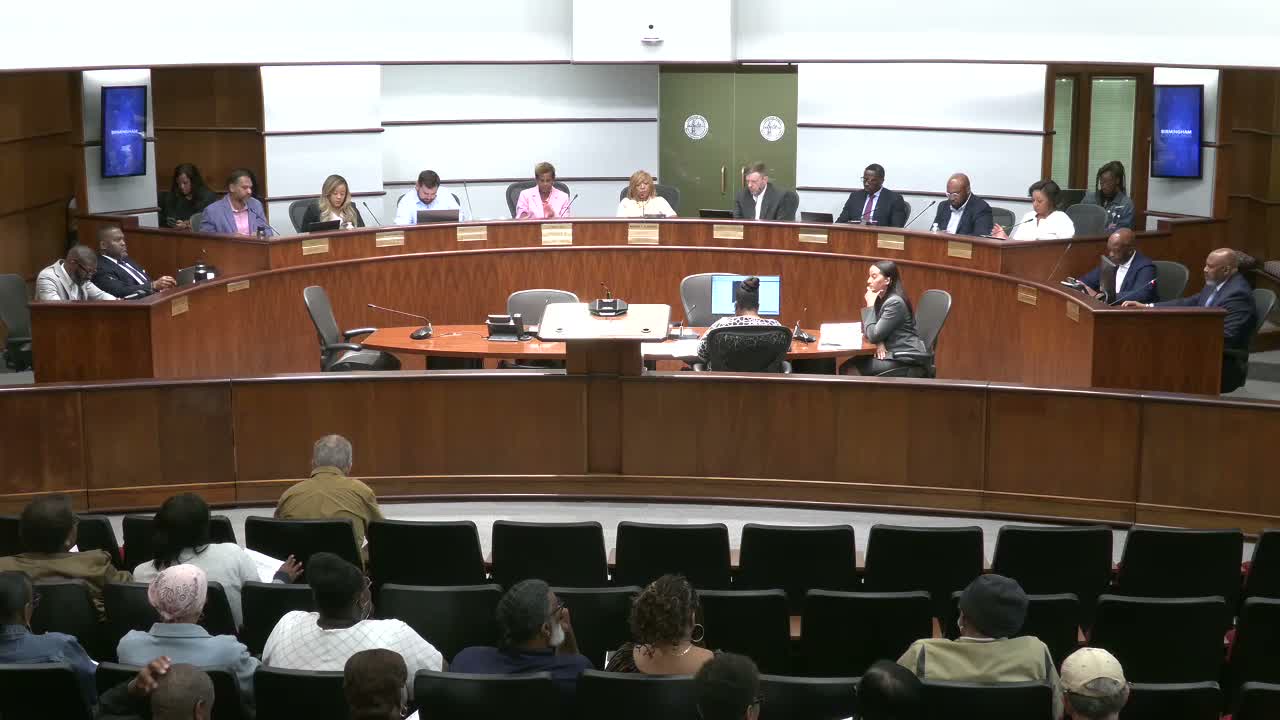
The Birmingham City Council voted April 21 to adopt an ordinance (ZAC2025‑15) that redraws zoning district boundaries across the city’s Eastern Area, including East Birmingham, Woodlawn, Eastlake and Airport Hills. City planners said the rezoning aligns parcel zoning with the city’s comprehensive plan, downzones abandoned heavy‑industrial sites, expands mixed‑use and establishes an 'urban neighborhood' district intended for higher-density, transit‑oriented development.
Planning staff Kim Spruill and principal planner Michael Ward told the council the process included five community meetings beginning in August 2024, a planning commission recommendation and a planning-and‑zoning committee recommendation. Staff emphasized that previously adopted parcel‑level conditions ('queue conditions') remain in effect and that property owners within 500 feet of the Eastern area received notice of the hearing.
During the public hearing residents raised several recurring concerns. Multiple speakers asked about soil contamination and testing: staff said the city does not conduct routine soil testing as part of the rezoning process but partners with federal agencies and grant programs for assessments, and noted North Birmingham efforts where the city worked with the EPA on testing. Residents from Brummit Heights and other neighborhoods urged clarity about potential health impacts and remediation opportunities.
Others protested specific mapping choices. Patricia Frazier asked why her mother’s parcel appears disconnected from the adjacent neighborhood; staff explained neighborhood boundary lines reflect historic citizen participation maps and said neighborhood associations can request boundary changes. Jacqueline Patton asked about the Coca‑Cola site; planning staff said the Coca‑Cola property is included and will be designated I‑1 (light manufacturing) while adjacent residential property designations remain unchanged. Luis Toledo and other residents warned that rezoning certain parcels near CMC Steel could increase truck traffic, noise and pollution and might conflict with nearby childcare and nonprofit uses.
Speakers also raised FAA noise and insulation grant questions near airport corridors and reported localized quality‑of‑life problems such as an alleged nearby scrap‑metal operation producing smoke and an active landfill/dump claimed to be within city limits. Council and staff responded with commitments to follow up — offering inspectors, code‑enforcement contact information and PEP (Planning, Engineering & Permits) staff to discuss parcel‑level concerns after the meeting.
Council discussion emphasized the plan’s stated goals of consolidating zoning, downzoning obsolete heavy industrial parcels and supporting walkable, transit‑oriented development. After the public hearing and brief council exchange, the president put the ordinance to a vote and announced the item passed.
Next steps included scheduling any subsequent implementation work by city departments, and staff offered to meet individually with residents and neighborhood associations to address parcel‑specific concerns and enforcement questions. The council directed staff to follow up on code‑enforcement complaints raised during the hearing.
Details on the ordinance text, parcel maps and implementation timeline were not specified at the hearing and are available from the city’s planning department upon request.