Get Full Government Meeting Transcripts, Videos, & Alerts Forever!
Get email alerts on the Education Graduation Requirements topic
No spam. Unsubscribe anytime.
SBOE hears divided views on proposed high‑school graduation changes as task force finalizes recommendations
Summary
State education officials, teachers’ union leaders and task force members debated proposals to add endorsements, expand competency‑based credit and reshape science and elective requirements; teachers warned changes could lower standards while industry and charter advocates emphasized scheduling flexibility and career pathways.
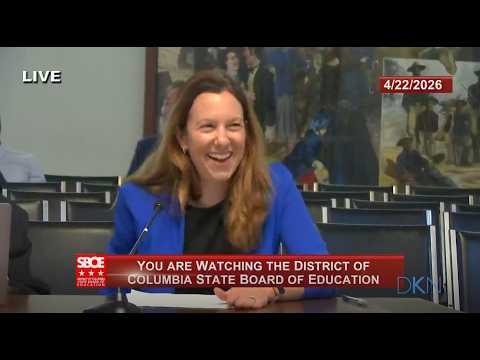
The District of Columbia State Board of Education on April 22 heard competing views on draft changes to high‑school graduation requirements as the High School Graduation Requirements Task Force nears its final recommendations.
State Superintendent Dr. [Mitchell] opened the meeting with agency updates and flagged the task force’s timeline, a new attendance dashboard and forthcoming model guidance on artificial intelligence use in schools. ‘‘We are moving forward with drafting a model policy’’ on AI and will continue community engagement, the superintendent said.
Panelists and advocates then outlined where they agree and disagree. Clara Haskell Botstein, chief of staff at the Office of the Deputy Mayor for Education, told the board that course equivalency and expanded hubs—like the city’s Advanced Technical Centers—are necessary to give students access to internships, dual enrollment and career pathways. ‘‘We should move away from a focus on seat hours towards competency,’’ Botstein said, arguing that flexibility can prevent scheduling barriers that lock students out of opportunities.
But Laura Fuchs, president of the Washington Teachers Union, said changes that cut credit hours or allow broad ‘‘test‑out’’ and substitution options would weaken instruction and disproportionately harm students already underserved by the system. ‘‘Any change that would result in the lessening of educational opportunities to our students must be blocked,’’ Fuchs said, opposing reductions in science requirements and mandatory capstones without sufficient resources for implementation.
Christie Dennis of the DC Public Charter School Board said the charter sector broadly supports endorsements and more post‑secondary planning touchpoints but urged that endorsements remain optional for schools and students. She also warned that a proposed ‘‘practical studies’’ diploma intended to support students with disabilities could be misunderstood by colleges and employers unless carefully designed and communicated.
Business and workforce advocates urged policies to expand career‑connected learning without sacrificing rigor. Tanya Bracci of the Federal City Council cited a recent early‑career study and told members that employers want more students prepared for work through internships and apprenticeships, but rigid school schedules often prevent students from participating.
Board members repeatedly returned to the trade‑off between ‘‘flexibility’’ and ‘‘rigor,’’ asking how proposed substitutions, competency demonstrations and capstones would be validated and implemented equitably across diverse LEAs. Several members pressed task force representatives to provide clearer operational details and equity safeguards before the board takes a final position.
The task force is in its final week; after it issues recommendations the State Board said it will prepare its own report and next steps. The board did not vote on graduation policy at the meeting.