Get Full Government Meeting Transcripts, Videos, & Alerts Forever!
Get email alerts on the Zoning Development topic
No spam. Unsubscribe anytime.
Council approves Crunch Fitness zoning with optional trail-adjacent parking after debate over outdated parking rules
Summary
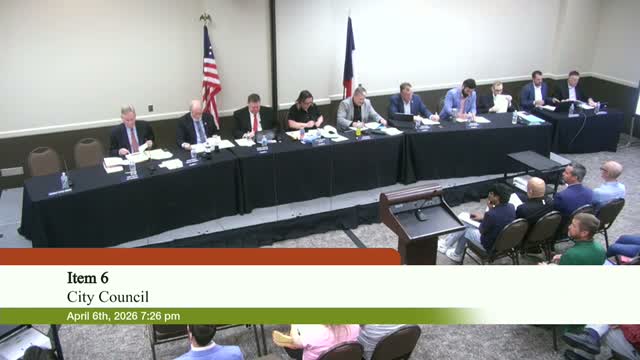
The Waxahachie City Council approved a zoning change and related development agreement to allow a Crunch Fitness at 150 Bessie Coleman Boulevard after a multi-month staff–applicant review and debate about the city's parking formula; the approval includes an option for additional trail-adjacent parking and a planned trail connection to the city park.
The Waxahachie City Council voted to approve a zoning change and development agreement to allow a Crunch Fitness gym adjacent to 150 Bessie Coleman Boulevard, subject to staff-recommended conditions and an option to include additional parking near a planned trail connection.
Council members heard a presentation from city staff explaining the request (ZDC173-2025) from Triangle Engineering on behalf of Beaumac Waxahachie Investments LLC and a proposed operational plan that influenced parking needs. Staff said the site could not meet the city's standard parking ratio, prompting the applicant to request the planned-development commercial zoning and an alternative parking plan. Trenton (city staff) told the council the planning commission recommended approval and that the applicant has agreed to build a trail connection across the property to link the development to the city's park trail.
The hearing turned to parking after a council member called the existing city parking requirement for gyms “extraordinarily ridiculous” and said the ratio represents government overreach that had cost months of staff and applicant time. Lance Cooper, a representative for Crunch Fitness, said the company's parking studies account for peaks and lows in gym usage and argued the site needed substantially fewer than the example 387 spaces cited by the council. Cooper confirmed the facility would not be 24/7 (hours top out around 10–11 p.m.), said the design includes lighting and security cameras, and explained the operational assumptions behind the proposed parking count.
To preserve flexibility the council approved the zoning change and the development agreement with an explicit option allowing the developer to include the additional trail-adjacent parking rather than making that parking mandatory. Council members discussed letting the developer retain the option so future operational plans could omit those spaces without returning to the council. The motion to approve the zoning ordinance and related development agreement carried on voice vote.
Why it matters: The council’s action lets a national fitness operator proceed with site development while the city moves to update parking regulations. Staff said a text amendment to the city's parking requirements is forthcoming to reduce future disputes over use-specific parking counts.
What’s next: The development agreement and zoning ordinance authorize the city manager or mayor to execute necessary documents; the developer will return with site plans and any administrative steps required to implement the trail connection and operational plan.