Get AI Briefings, Transcripts & Alerts on Local & National Government Meetings — Forever.
House Finance Committee advances bill raising disability pay to 75% and extending retiree health for some injured state employees
Summary
The Alaska House Finance Committee voted April 29 to advance House Bill 210 after adopting amendments that expand occupational disability coverage beyond public safety and increase initial income replacement; debate centered on actuarial and fiscal implications before the bill was reported out of committee as amended.
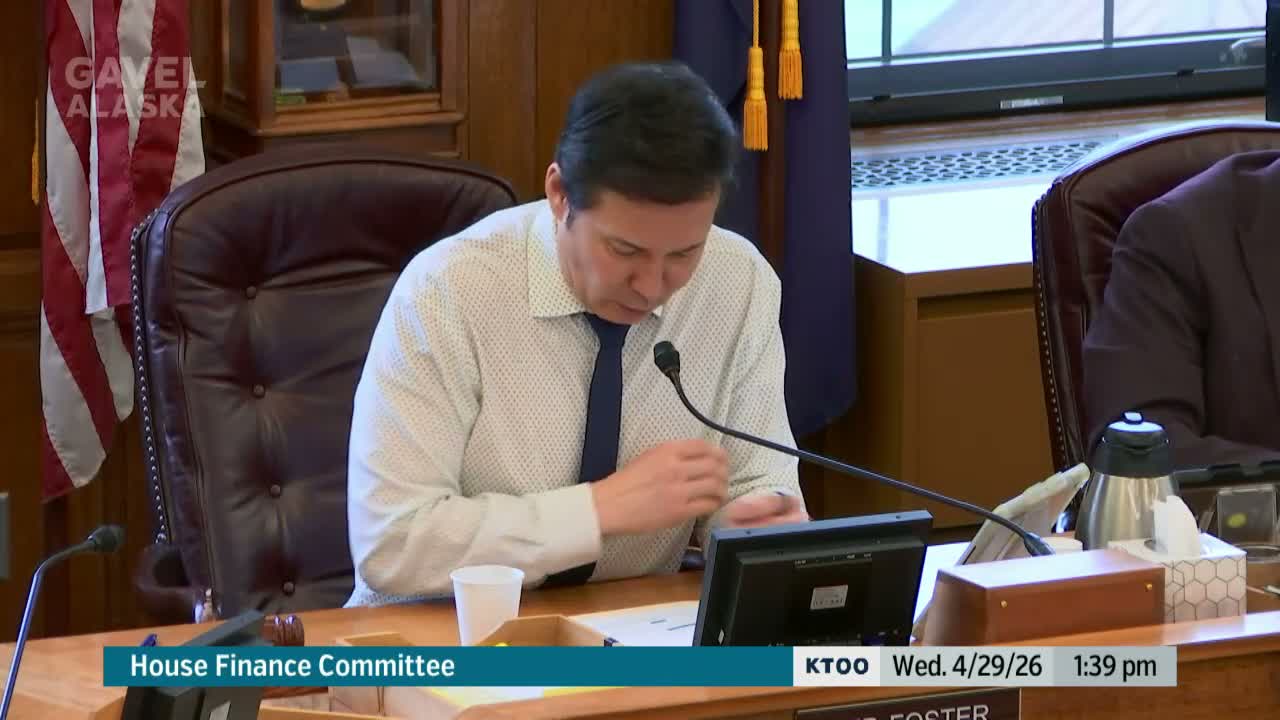
The Alaska House Finance Committee voted Wednesday to report House Bill 210 out of committee as amended, adopting changes that raise occupational disability income replacement and extend retiree medical coverage to a broader set of state employees injured on the job.
Julia O'Connor, staff to Representative Copp, opened the committee's work with a summary of the bill: "HB 210 updates Alaska's occupational disability benefits for peace officers and firefighters who are permanently injured in the line of duty. The bill increases the benefit from 40% to 75% of their salary after the first 12 months of being on disability. This change applies to both current and future recipients," she said, framing the measure as support for workers facing career‑ending injuries.
Representative Hannon moved the first amendment to broaden the bill's eligibility beyond police and firefighters to other state employees who become occupationally disabled (examples cited included linemen, ferry workers and pilots) and to extend retiree major medical coverage to that class so they do not lose healthcare upon separation from employment. Hannon urged the committee to "close what has been created as that gap" in retiree medical coverage for certain defined‑contribution employees.
Members questioned the amendment's fiscal impact. Representative Stapp and others asked for actuarial analysis of extending healthcare to additional employees; staff and the sponsor said the population affected is small (committee staff cited 37 total disabled members in the program, with roughly 16 in public safety and 21 in other categories) and that the state retiree medical trust is currently in an overfunded position according to materials cited during the hearing.
Several members stressed a statutory and procedural limit on making material changes to retirement systems without an actuarial report. Representative Stout noted Alaska statute 24.08.036, saying the law requires an analysis of short‑ and long‑term costs and effects on actuarial soundness before reporting a bill that affects the retirement system to the rules committee.
The committee voted on a procedural (conceptual) motion to separate the occupational‑benefit expansion from the retiree‑healthcare extension; that motion failed on a roll call, 5 yea to 6 nay. After further discussion and reference to an Alaska Retirement Management Board analysis in the packet, objections were removed and the committee adopted Amendment 1 expanding occupational disability coverage and extending the retiree medical benefit to the affected class.
Representative Tomaszewski then moved Amendment 2 to increase the initial benefit from 40% to 75% for the first 12 months of disability; members discussed vocational rehabilitation incentives and how benefits interact with subsequent employment income. The committee adopted Amendment 2 as amended to conform to Amendment 1.
Amendments 3 and 4 were not offered; Amendment 5 (which would have changed presumptions for certain disease classes) and Amendment 6 were withdrawn after members said they wanted more time and actuarial information.
With amendments adopted and procedure complete, Representative Schrage moved HB 210 (work order 34LS0938A) out of committee "as amended with individual recommendations and attached fiscal note." There was no objection and the motion carried. Co‑chair Foster asked members to sign the committee report; staff indicated a floor slot and forthcoming scheduling details.
The next procedural steps are the committee report and floor consideration; the committee attached the existing fiscal materials used during the hearing and noted that additional fiscal or actuarial work could be requested on the floor or in subsequent stages.
(Reported from the House Finance Committee hearing on April 29, 2026.)