Get AI Briefings, Transcripts & Alerts on Local & National Government Meetings — Forever.
Fairbanks spur cost and tariff allocation draw sharp questions at committee hearing
Loading...
Summary
Committee members pressed how $150–$200 million in Fairbanks spur costs would be allocated; consultant Nick Fulford said spreading the cost across full export flows reduces per‑MMBtu impacts to cents, but allocating to a smaller in‑state customer base could imply double‑digit price increases per MMBtu.
Discussion of the Fairbanks spur’s capital cost and who should pay drew sustained attention during the hearing on HB 3 81.
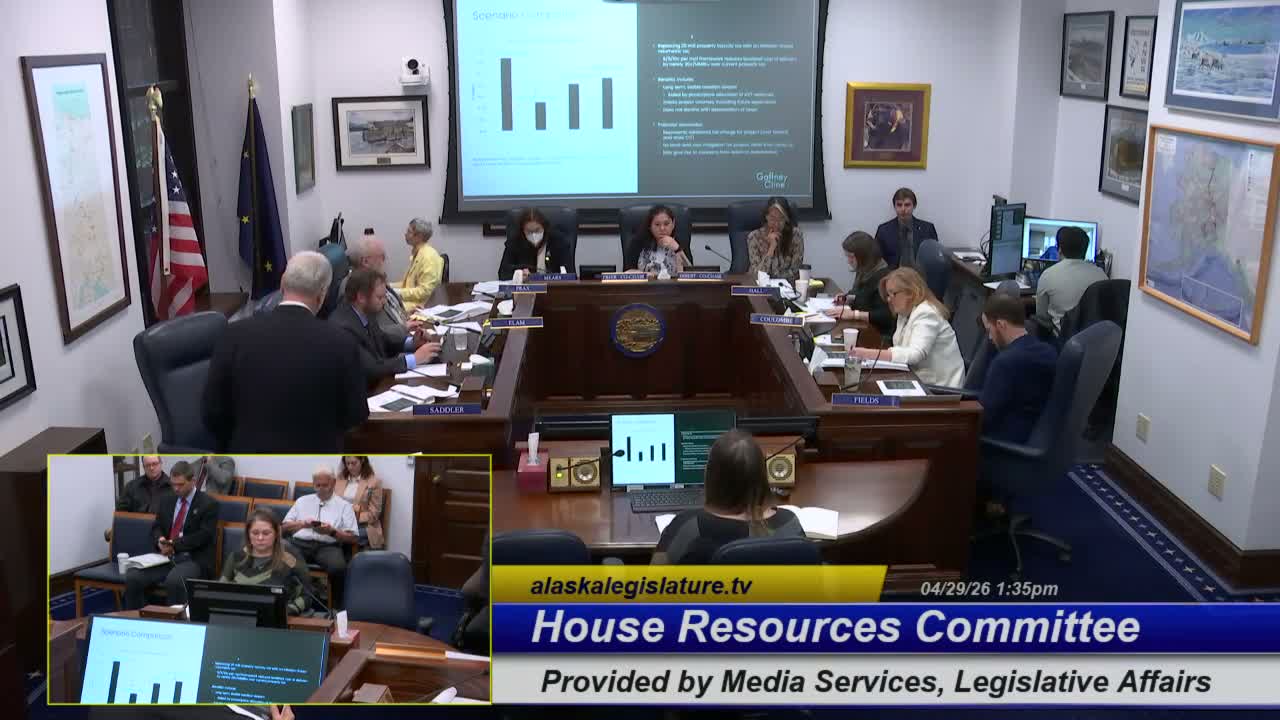
Nick Fulford, senior director for LNG and energy transition at Gaffney Klein Energy Advisory, told the committee the spur’s capital cost is estimated between $150 million and $200 million. "If you were to say, well, what pipeline tariff would those customers have to pay to support a $200,000,000 spur, it comes out to about $12 to $14 per MMBtu," Fulford said, when the cost is borne by a small residential/commercial load in Fairbanks. He contrasted that with a scenario where the cost is smeared across the full export throughput: "In that sense, the impact on the overall tariff is relatively small — you’re adding 2¢," he said.
Representative Fields and Co‑chair Divert asked whether the bill’s language or other legislative drafting could ensure the Fairbanks spur cost is allocated broadly (a "postage‑stamp" tariff) rather than only to in‑state customers. Fulford described two common tariff designs: a postage‑stamp (same tariff for all shippers regardless of distance) and a distance‑based charge, and said spreading the spur cost across a large customer base is a common solution to avoid very high local charges.
Committee members expressed differing views. Representative Sather said Fairbanks residents standing to benefit from gas access should expect to shoulder some of the cost; Representative Meares cautioned that asking Fairbanks to fully pay for system segments that also serve larger population centers is not an equivalent argument and urged inclusion of the spur in the overall project balance.
The Department of Revenue said its modeling focuses on fiscal revenue but that tariff design and interconnection terms are commercial and engineering details that merit legal and project partner input. The committee asked staff to coordinate with legislative counsel and AGDC to clarify how cost allocation language might be drafted.
The committee did not adopt any statutory language in the hearing. Follow-up requests included: additional DOR modeling to show CS amendments’ impacts and written legal guidance about how to structure tariff or AVT language so municipalities and consumers are protected or clearly informed.