Get Full Government Meeting Transcripts, Videos, & Alerts Forever!
Get email alerts on the Land Use Subdivision topic
No spam. Unsubscribe anytime.
Kenilworth planning board approves four‑lot subdivision for CoreWeave amid public concern over data center
Summary
The Kenilworth Planning Board voted to approve a conforming, variance‑free preliminary and final four‑lot subdivision of land owned by CoreWeave, while dozens of residents urged the board to delay or reject the split pending answers about a proposed data‑center project, utilities, noise and water impacts.
The Kenilworth Planning Board on April 28 approved application 26002, a preliminary and final major subdivision that divides the former Merck parcel on Galloping Hill Road into four separate lots owned by CoreWeave, despite an extended public‑comment period in which residents demanded more transparency about a related data‑center proposal.
The vote followed testimony from the applicant’s attorney, Stephen Hale, and a sworn surveyor, Matthew Sippel of Langan Engineering, who said the plan is a variance‑free subdivision that creates four conforming lots from a roughly 35–36‑acre parcel. Planner Kevin O’Brien told the board the subdivision meets redevelopment‑plan and zoning criteria and that any future development or site‑plan applications would be noticed and reviewed separately.
Why it matters: dozens of residents and regional stakeholders attended the hearing and pressed the board on issues they said were already unfolding at the site — including utility work, substations, noise, water use, and whether subdividing the parcel would be used to segment review and avoid assessment of cumulative impacts. “By dividing it into four lots, there’s a risk that each portion is reviewed in isolation rather than as part of a larger coordinated development,” resident Brittany LaRosa said. Health and environmental impacts, job claims and a state tax‑credit claim were also raised repeatedly.
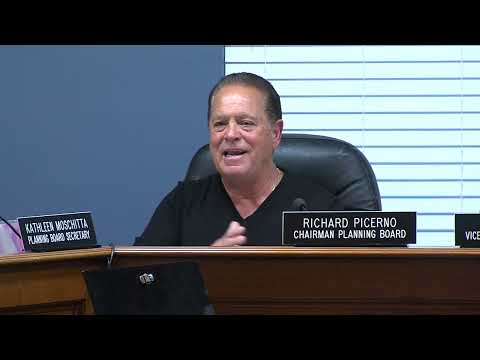
What the board said: Chair (identified in the record only by role) repeatedly stressed that the application before the board was for lot lines only. The board’s attorney and planner explained that the borough adopted a redevelopment plan last year that lists permitted uses for the 2000 Galloping Hill Road zone — including research, manufacturing and data centers — but that permits, site plans and operational details would be presented in separate filings subject to public notice. The board’s engineer confirmed technical review letters dated April 24, 2026, and recommended granting a small set of checklist waivers to deem the subdivision application complete.
Public concerns and responses: Residents asked when they would know about any site plan or construction, whether property owners within 200 feet would receive mailed notices, who would pay for substations, and what the municipal and state oversight would require for stormwater, contamination remediation and noise. Planner Kevin O’Brien and the board’s professionals said owners within 200 feet are notified by letter, additional materials are posted on the borough website at least 10 days before a hearing and that environmental and infrastructure issues would be evaluated as part of any future site‑plan application and subject to NJDEP and other agency review.
The vote: After closing the public portion, the board voted in roll call to approve the subdivision application. The board’s roll call record shows an affirmative vote by the attending members, and the chair announced that “the application has been approved.” The approval applies only to the subdivision; any buildings, operations, or utility work will require separate, noticed approvals.
What’s next: If CoreWeave or another party files a site‑plan application describing buildings, utilities or operations, the planning board will hold a separate public hearing and accept testimony and technical reports. Members of the public were instructed to monitor the borough website and the 200‑foot notice letters for future filings. The board’s approval of the lot lines does not itself authorize construction or operational changes.
— Transcript evidence: board and professional testimony, public comments and the roll‑call vote at the April 28 meeting were used as the basis for this report. The board recorded that application 26002 is a conforming, variance‑free subdivision and that site‑plan matters remain for future hearings.