Get AI Briefings, Transcripts & Alerts on Local & National Government Meetings — Forever.
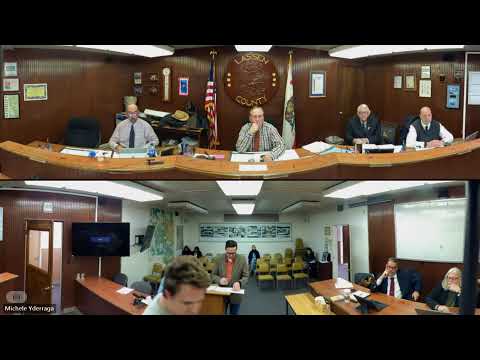
Lassen County supervisors pause adoption of updated multi‑jurisdiction hazard mitigation plan to confirm FEMA stance on edits
Loading...
Summary
Lassen County staff said FEMA approved an updated multi‑jurisdictional hazard mitigation plan covering the county, the City of Susanville and the local rancheria, but supervisors agreed to delay formal adoption until staff confirms whether requested edits (including a disputed groundwater sentence) require FEMA reapproval.
Speaker 2 presented an updated multi‑jurisdictional, multi‑hazard mitigation plan that covers Lassen County, the City of Susanville and the local rancheria and said FEMA has approved the draft; adoption by the board is required to maintain eligibility for certain pre‑ and post‑disaster federal mitigation funds.
The plan replaces a previous document adopted in 2018 and approved in January 2019; Speaker 2 said adopting the current draft would restore the county to a five‑year compliance cycle and preserve access to mitigation funding. "So it's pending adoption from you at this point," Speaker 2 told supervisors.
Why it matters: federal mitigation grant programs typically require jurisdictions to keep an approved mitigation plan on file. County staff emphasized the procedural importance of a timely adoption to avoid lapses in eligibility for mitigation dollars.
During discussion, several supervisors and staff raised requests for edits and clarifications in the draft. Speaker 3 pointed to a passage in the agricultural pests section (section 5.4) and suggested explicitly identifying certain species and ensuring the language did not unfairly label local wildlife. "You need to put wolves in there," Speaker 3 said, urging the board to consider that wording at the next revision.
Another substantive query concerned weed abatement: Speaker 3 asked whether the plan should include language authorizing coordinated weed abatement efforts among the county, the city and the rancheria; staff located related program language in section 4.2 and confirmed the draft already addresses abatement programs.
A key factual dispute emerged over groundwater figures. Speaker 3 challenged a sentence that cited an average annual overdraft of 5,000 acre‑feet for the valley groundwater basin, saying recent consultant work showed that figure was not accurate. Speaker 2 read from the plan’s citation, identifying the 2021 Big Valley Groundwater Sustainability Plan and saying that document reported a rough historic water budget estimate of about 39,300 acre‑feet per year and an overdraft estimate of about 5,000 acre‑feet. The disagreement centered on whether the contested sentence should remain; Speaker 3 said the 5,000 figure had been shown to be incorrect by newer analysis.
Because FEMA had already approved the plan, supervisors asked whether removing or substantially editing that groundwater sentence would require resubmittal to FEMA. Speaker 2 said FEMA approval complicates unilateral edits and that staff would need to confirm whether the suggested change is considered material. Speaker 1 urged caution and recommended postponing a final adoption so staff could check with FEMA. "I would recommend that we table this to the 27th and give Mr. Norwood the time to check with FEMA," Speaker 1 said; board members indicated informal agreement to that schedule and asked staff to return with FEMA guidance.
Other items raised by supervisors included local pest concerns, including bark beetle impacts, and a question about the plan’s references to GIS capabilities. Speaker 2 told the board staff can use the referenced GIS system and said the plan will go to the planning commission in February before returning to the board for adoption consideration.
What’s next: the board left formal adoption pending staff confirmation from FEMA on whether the proposed edits (notably the disputed groundwater language) require reapproval; staff said they will return with that information at the Jan. 27 meeting. The planning commission will review the plan in February.
No formal vote on adoption was recorded in the transcript; supervisors agreed to delay final action pending the checks with FEMA.