Get AI Briefings, Transcripts & Alerts on Local & National Government Meetings — Forever.
Denton planners outline noise, setback and power limits as city monitors data-center expansion
Loading...
Summary
Staff told the Planning and Zoning Commission that Denton has two data centers and detailed zoning, noise and setback standards; the municipal utility said power, not water, is the limiting factor and ERCOT/PUCT rules for expansion (Batch 0) remain unsettled, with final guidance expected by July 10.
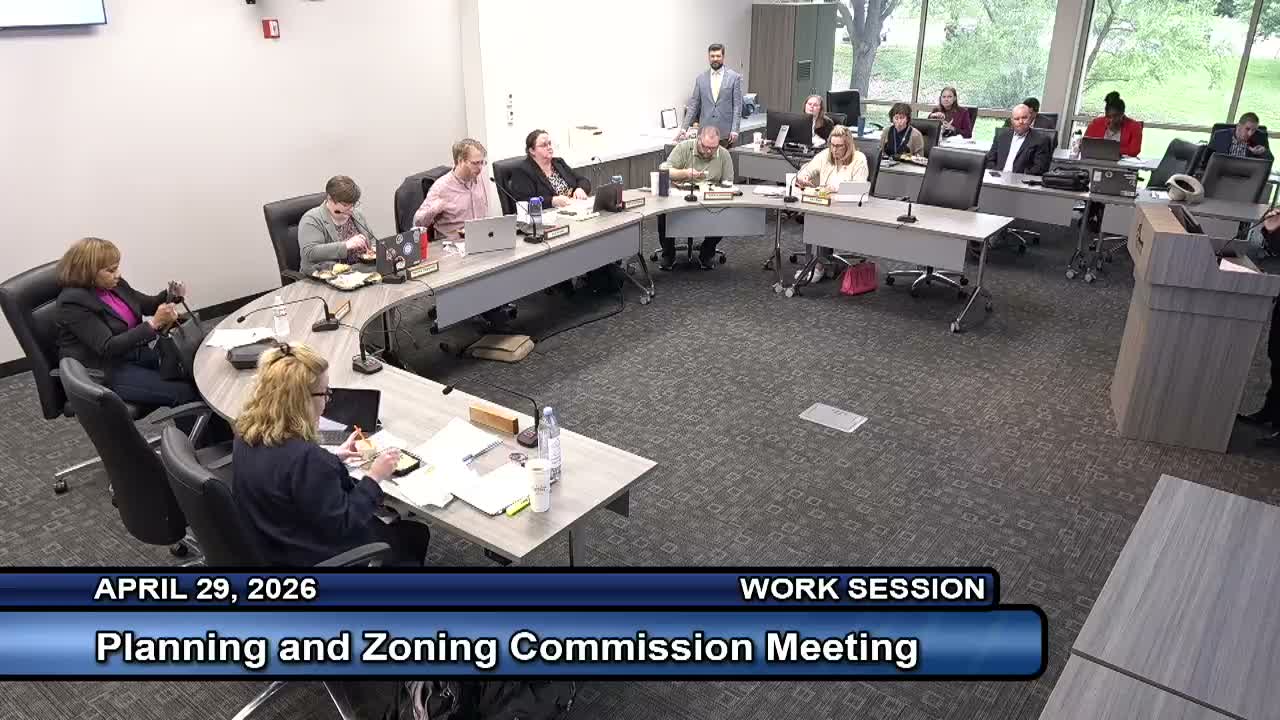
Angie Manglerus, the city's assistant planning director, told the Denton Planning and Zoning Commission on April 29 that the city currently has two approved data centers and clarified how the city's Development Code (DDC) treats modular and warehouse data centers.
The presentation explained that modular centers (pod-like, shipping-container systems) are SUP-only in many districts and that warehouse data centers are treated like industrial buildings, with MR and SC districts limiting warehouse centers to 55,000 square feet of gross floor area. "Any modular data center proposed in the city is subject to our use specific standards," Manglerus said, noting requirements for screening, landscaping and a 100-foot setback from adjacent residential zoning or uses.
Why it matters: data centers can carry local impacts (noise, visual screening, access and utility demand) and commissioners pressed staff about those tradeoffs. Manglerus said applicants must submit an environmental noise and vibration study performed by a qualified professional; the DDC caps on-site noise at the property line at 60 decibels or no more than a 3-decibel increase above existing ambient conditions. "At the property line, the data center shouldn't be generating noise greater than 60 decibels," Manglerus said.
Commissioners raised practical concerns about parking, staffing and neighborhood impacts. On parking, staff said modular centers require one space per employee on the largest shift, while warehouse centers use a ratio aligned with warehouses (roughly 1 space per 3,500 gross square feet or by director determination).
Energy constraints and Batch 0: the commission also heard from a DME representative about electricity and the broader grid picture. The DME official said "power is the limiting factor" for data-center growth and that many operators have solved water-use concerns with closed-loop systems. He explained that, in Denton's single-serve utility territory, the municipal utility is generally obligated to serve a new load that meets development requirements: "If a data center wanted to go right there and they could meet all of the development services requirement, it was zoned, we have to serve them. We do not have a choice." The official added the city is moving toward a publicly available large-load tariff rather than confidential, individual purchase power agreements.
Staff and DME repeated that ERCOT and the PUCT remain in the process of defining rules for Batch 0 (a prioritization/queueing process for large data-center power needs). "They're looking to have this established by July 10," staff said, and committed to circulate final rules and a memo to the commission when available.
What remains unresolved: staff said they are monitoring state and federal legislation (including SB 6) and regional implementation changes that could affect which data-center projects proceed and under what conditions. Commissioners asked staff to circulate supplemental slides and a short memo on Batch 0, its possible effects, and what the city can require under local zoning and its municipal-utility authority.
The commission received the report and closed its work session on data centers at 5:57 p.m.; questions and follow-up materials were promised by staff.